Change your location to view content tailored for you.

Data centres have always been mission critical infrastructure – the beating heart that enables our interconnected, digital world to function. As they are the essential infrastructure of our increasingly digital ecosystem, how do we ensure they are fit for the future?

Data centres are the places where the ‘cloud’ meets the ‘ground’ – storing the increasing amount of zettabytes of data that enable us to stay connected, informed and entertained across every facet of our lives. Particularly with the surge in data demand due to the increasing use of AI, which requires approximately five times the power of traditional data centre storage and processing, the impact of data centres is significant. While still expected to be reliable and efficient, data centres are also becoming larger and more complex, while needing to be cognisant of their environmental footprint. Accessing reliable power, and increasingly using renewable energy, has become paramount.

As data centres expand across APAC, being able to design, deliver and operate the requisite infrastructure with efficiency and sustainability at the forefront, is key to unlocking the innovation which will take data centres into the future.

What are the critical design considerations?

Building capacity efficiently

Data centre capacity is expected to increase up to 27 per cent year-on-year to 2030. This will require data centres to be designed, procured and delivered more efficiently, cost effectively and to a tighter pre-determined timeline to meet this growing demand.

Reliability and resilience through innovation

Customers expect their data to be available 24/7. Innovative approaches to address the challenges of power and water supply, cybersecurity, regulatory environments, supply chain, and availability of expertise, are crucial to guarantee resilience of data centres to internal and external factors.

Designing for sustainability

Increasingly, governments and customers are demanding that data centres are environmentally and socially sustainable. This requires new approaches to design, delivery and operations.

How do we design data centres that are fit for the future?

Considerations for future-proofing data centres involves foresight and understanding of a broad range of issues, starting with strategy and continuing through design, delivery and operations. The digital age has increased the demand for data centres that meet stringent security, energy efficiency, business continuity and productivity optimisation needs.

In addition, data centres are required to accommodate unpredictable future loads, and long-term sustainability. Data centres are large users of energy, and therefore significant contributors to carbon emissions.

The application of cutting-edge technologies and innovation has become a burning issue in the design and construction of data centres. With the emergence of digital engineering and the widespread use of Building Information Modelling (BIM), modular design and prefabricated construction is becoming more prevalent, allowing scaling of facilities in line with demand and potential revenue growth as well as tenant requirements. Expansions and new builds, and their operations, will become more efficient and environmentally sustainable.

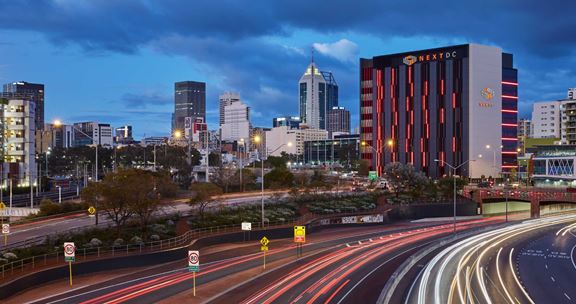
In this video, we asked Jeff Van Zetten, Chief of Engineering and Design for one of our key data centre clients, NEXTDC, about what the future holds for data centres, the role they play in our lives and how engineers are integral to NEXTDC's success.

CASE STUDY

A data centre configurator tool to enable efficient site selection and design

As we create more data, we need more reliable, efficient data centres, which can be designed and built cheaper and faster.

Aurecon conducted a Data Centre Development Sprint, bringing together programmers, data centre specialists, designers and leaders across the Aurecon business to create a data centre configurator tool to enable fast and efficient site selection and automated design of data centres.

We joined with world-leading AI specialist Archistar to develop a digital site selection tool specifically for the data centre sector to enable real-time feasibility studies to find suitable sites for locating new facilities.

This is crucial for data centre owners and operators in the current climate of increasing data use and storage demand.

10 essentials for designing and delivering data centres

Staged growth approach

Staged growth approach – A staged growth approach is essential to manage current needs and prepare for the future, while avoiding costly stranded assets.

Data centre facilities management

Data centre facilities management – Early adoption of facilities management consideration is crucial for designing optimised, efficient and value-adding data centres that are prepared for future needs.

Modularisation

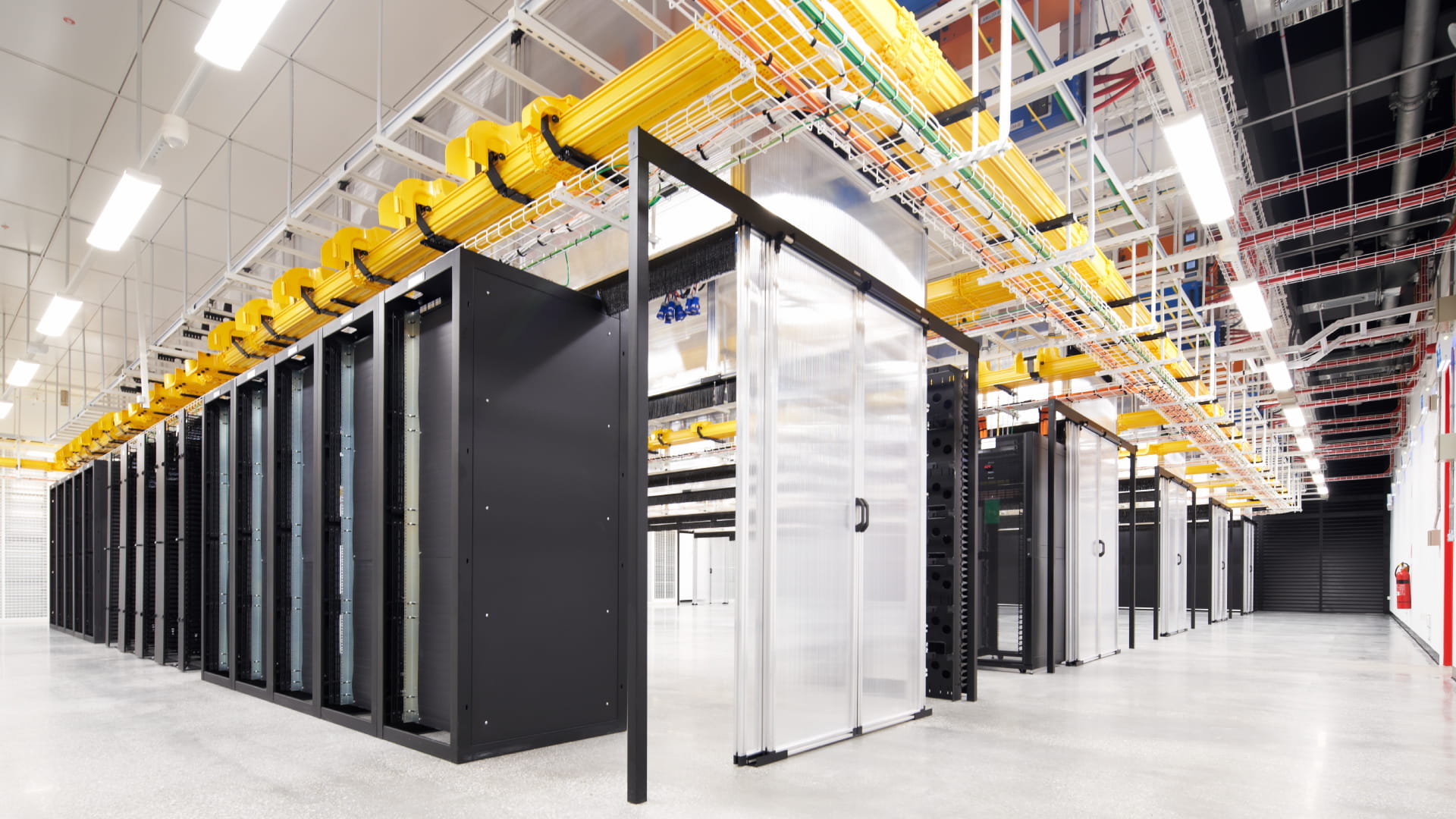
Modularisation – As data centres need to be more flexible, fit into tighter spaces in urban areas or be located in more remote locations, modular design brings high reliability, reduced project deployment time and robust construction and testing.

Minimise risk downtime

Minimise risk of ‘downtime’ – With ‘the internet of everything’ no longer just a thing of the future, mission critical failures are not be an option. High risk implementation planning minimises the risk of down time.

flexible during design

Flexible during design – Building space during the design phase and including different density zones in the site plan will provide flexibility in the white space zones to ensure expansion capability.

Renewable power options

Renewable power options – Accessing renewable power is a ‘must have’ for data centres.. Sites where renewable power is more readily accessible, and options for utilising renewable energy in the construction and operation of data centres are becoming essential.

Mix and match designs

Mix and match designs – There is an increased focus on application resiliency as opposed to the performance of specific buildings. A mix and match approach to facilitate balance between availability versus resilience, consideration of the tier rating, and the redundancy of the data centre is essential.

Direct cooled IT equipment

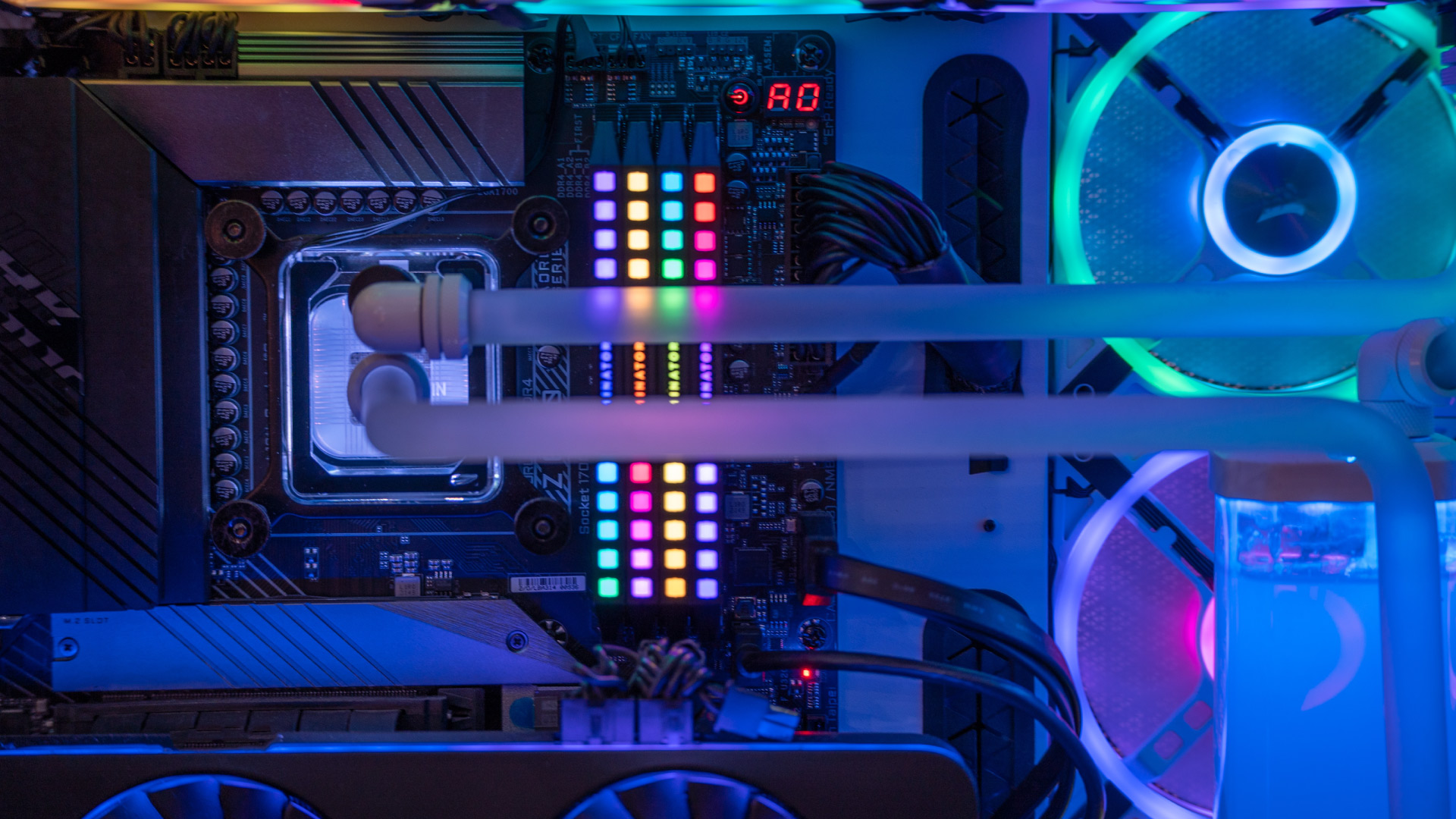
Direct cooled IT equipment – Increased processing power and the increase in output/watts used is bringing higher power densities, encouraging the use of immersion and direct cooled IT equipment options.

Converged infrastructure intelligence

Converged infrastructure intelligence – Data centre operators now need to treat their infrastructure as a single system and need to be able to measure and control their facilities. Converging the infrastructure instrumentation and control systems and connecting them to IT systems is essential.

Free cooling everywhere

Free cooling ‘everywhere’ – Locations where 70 per cent of the time free cooling can be adopted, are becoming the ‘go-to’ locations. Underwater data centres? Not such a crazy idea, with Microsoft already testing such a concept.

CASE STUDY

Turning existing buildings into data prosumers as well as consumers

As part of Aurecon’s Design Academy, we partnered with RMIT and the University of Sydney to research and develop a proposition around integrating mini data centres into existing buildings.

Utilising under-used space such as carparks or empty offices, using waste heat from HVAC systems as an energy source and incorporating liquid immersion cooling, such data centres could solve the challenges of data latency, rising data demand, high energy consumption and costs, carbon emissions and vacant CBD office space. It also provides an opportunity for asset owners to add value for tenants and generate additional revenue.

While integrating data centres back into existing buildings seems like going back to the future, technologies have improved significantly to make this proposition a viable consideration. We are currently discussing this opportunity with interested stakeholders.

Explore insights

More insights
Digital rendering of transmission towers and power network

Energy stability and security: From smelters to digital mega loads

Hyperscale data centres are reshaping grid design, stability and security. Grid-forming energy storage can restore local strength for digital infrastructure growth.

Learn the critical role of project management as data centres grow in scale and complexity.

Why project management is key to delivering and scaling complex data centres

Strategic project management drives the successful delivery and scaling of complex data centres, meeting rapid timelines and evolving demands.

Structural solutions for accelerating data centre delivery in Asia Pacific.

Structural solutions for accelerating data centre delivery in Asia Pacific

Discover how climate-aware design, material innovations, and modular approaches accelerate data centre construction while maintaining long-term efficiency.

PUE as a standalone measurement presents limitations in measuring the data centre efficiency.

Is PUE enough? Measuring energy efficiency in data centres

Power Usage Effectiveness (PUE) as a standalone metric presents limitations in measuring the data centre efficiency. Learn why the right metrics matter.

Chilling out with liquid cooling in data centres.

Chilling out with liquid cooling in data centres

Liquid cooling in data centres offers significant technological advancements, allowing for increased power density demands while reducing carbon emissions.

Decarbonising mission critical data centres in Asia-Pacific

Decarbonising mission critical data centres in Asia-Pacific

Aurecon’s sustainability experts explore the key design considerations for reducing operational and embodied carbon in data centres across the Asia Pacific.

Blogs & Podcasts

Our blog – Just Imagine

Could emails help your office stay warm?

Repurposing unused commercial real estate into mini data centres might be the key to solving our data storage problem.

Our podcast – Engineering Reimagined

Ep.79 Rigour, creativity and systems thinking: a Silicon Valley veteran’s insights

Join Tanya de Hoog and Chandrakant Patel as they explore innovation, AI, sustainability, and the future of data centres through engineering and systems thinking.

Our podcast – Engineering Reimagined

Ep.35 Microsoft and the next frontier

Microsoft Azure's Lynn McDonald and Aurecon dive into the business opportunities in the growing space industry, as well as diversity and inclusion in engineering.

How can Aurecon's data centre design innovation help you?

Data centres need to accommodate unpredictable future loads and long-term sustainability. How do we ensure they are fit for the future? Early design consideration is essential to manage current needs and prepare for the future while avoiding costly stranded assets.

Aurecon provides expertise in data centre design and development through years of experience working with some of the largest data centres developers, owners and operators worldwide. Our APAC data centre team understands what is required to design and deliver a portfolio of data centre assets that will be resilient, safe, reliable and sustainable for the future.

We work with clients across their entire organisations to understand their business and investment needs, asset-related issues, and the potential links between the strategic, technical, commercial and sustainable aspects of assets and operations. We develop business cases, undertake technical due diligence and asset management and performance assessments to assist with the efficient operation and future performance of single assets or entire portfolios. We also work with our clients to protect and enhance their business performance by responding to the risks and opportunities presented by sustainability and climate change.

We are pushing the boundaries by partnering with universities, industry, developers, owners and operators to not only ask 'What is' and 'What if', but to also ask 'What Wows'? Get in touch with one of our team members below.

Get in touch with our people

Or contact an office near you.
Simon McFadden, Client Director for Data and Telco
Simon McFadden

Industry Director, Digital Infrastructure – APAC

Adrian Jenkins, Aurecon
Adrian Jenkins

Major Projects Director, Digital Infrastructure – APAC

Phil Motteram – Client Director, Asia Data and Telco, Asia
Philip Motteram

Client Director – Australia

Bharti Raniga, Aurecon
Bharti Raniga

Technical Director, Project Management – New Zealand

David Wong, Aurecon
David Wong

Industry Director, Infrastructure & Data Centres – Southeast Asia

Steven Lee, Aurecon
Steven Lee

Director of Operations, Built Environment – Singapore

Sean Lee, Aurecon
Sean Lee

Director of Growth & Delivery, Indonesia & Key Client Director, Data Centre – Southeast Asia

We would love to work with you to bring your ideas to life, so get in touch and we'll get back to you.

Or contact an office near you.