Soltice Morrison appointed to Maori Advisory Group Taumata Arowai
Aurecon's Soltice Morrison joins Te Puna to advise The Water Services Authority – Taumata Arowai on Māori interests and knowledge in water services.


Change your location to view content tailored for you.
An innovative new Kāinga Ora public housing pilot tackling climate change in the built environment will feature on the world stage at the United Nations Climate Conference (COP26).
Ngā Kāinga Anamata, meaning ‘homes of the future’, is a sustainability project aimed at driving carbon emission reduction in New Zealand’s construction industry. The project has been selected as one of only 17 initiatives worldwide to be on show in the COP26 ‘Build Better Now’ virtual pavilion from October 31.


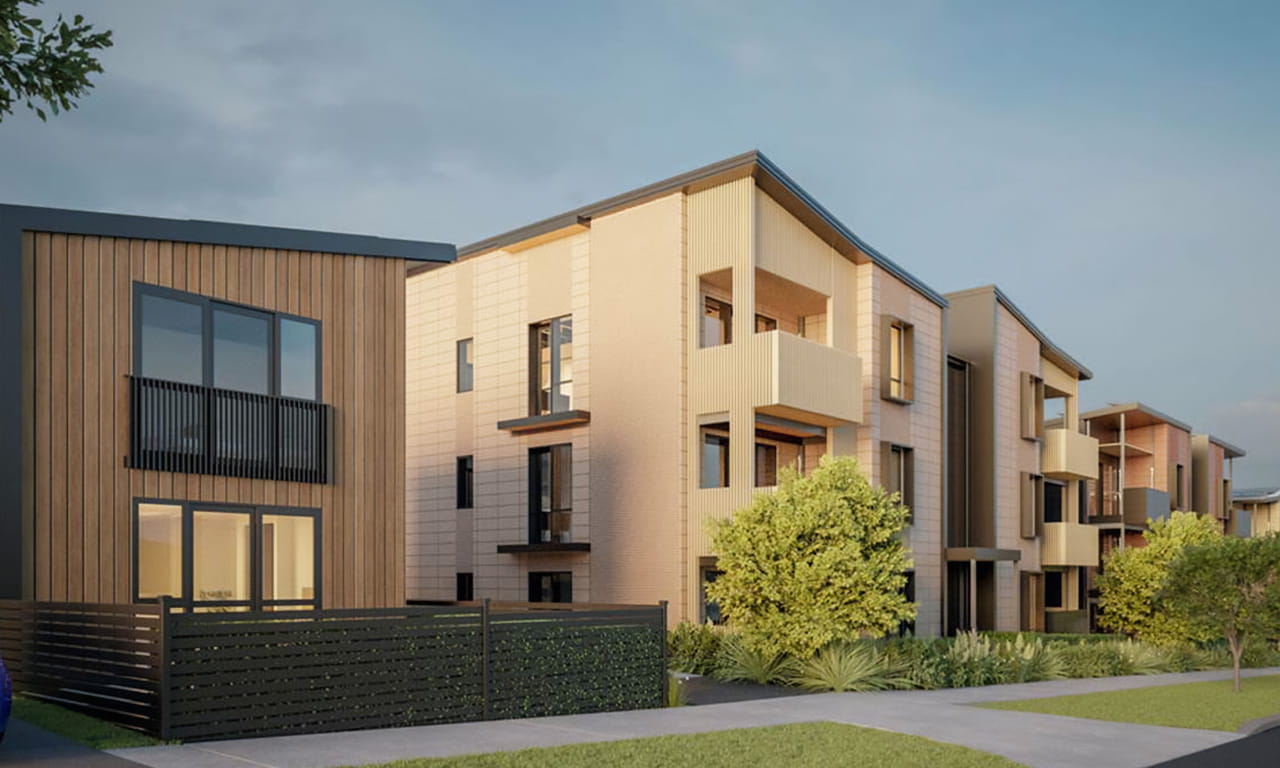
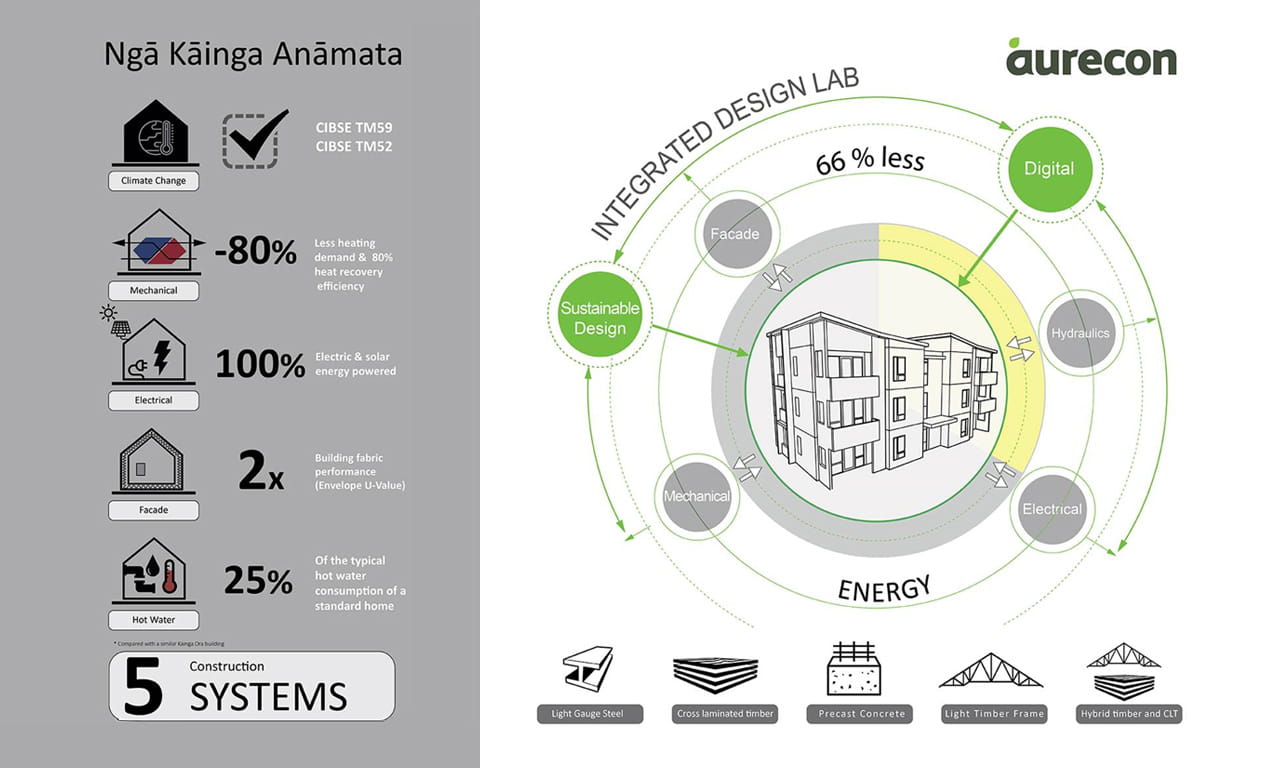
The project will deliver 30 new homes within five, three-level apartment buildings in Auckland’s Glendowie. Each near identical building will use a different construction technology [1], enabling sustainability insights to be gathered on a range of building materials and systems.
Aurecon is the Passive House Designer for Ngā Kāinga Anamata, and is delivering building services (mechanical, electrical, hydraulic engineering and fire protection) and facade engineering peer review across all five apartment buildings, as well as energy performance modelling.
Aurecon NZ Managing Director Tracey Ryan said it was fantastic to see Ngā Kāinga Anamata selected to feature at COP26. “Ngā Kāinga Anamata demonstrates a real leap forward for public housing in Aotearoa, and the wider New Zealand building sector. By using the Passive House framework, Kāinga Ora has shown how these buildings can provide high performing, thermally comfortable and healthy homes for residents and their whānau, while helping New Zealand achieve our emissions-reduction targets.”
Ngā Kāinga Anamata seeks to resolve many underlying problems with New Zealand’s housing sector including construction sector productivity, energy hardship, sick building syndrome, and climate change mitigation.
It also aims to address biodiversity loss, actively protecting, restoring and supporting local ecosystems. Planned native biodiversity corridors and large pockets of regenerated native forest will provide a network of plant life supporting insects, birds and other animals so they can co-exist and thrive alongside the new development.
Due to begin construction in early-to-mid 2022, the public housing development will achieve MBIE’s Building for Climate Change programme targets, reaching the proposed 2030 final operational efficiency cap by 2024; six years ahead of expectation.
The ‘Build Better Now’ virtual pavilion is free and open virtual exhibition and events series highlighting the built environment’s role in tackling the climate and biodiversity/ecological crises. It will be live from 31 October at buildbetternow.co.
A second Aurecon project, Monash University’s Woodside Building for Design and Technology will also feature in the Build Better Pavilion at COP26. The Woodside Building is the one of the most efficient and innovative teaching buildings in Australia and the largest Passive House project in the Southern Hemisphere.
[1] The five construction materials used are: mass timber/cross laminated timber (CLT); light timber frame (LTF); precast concrete; light gauge steel and a hybrid CLT/LTF.

Group Director, Brand, Marketing & Communications
Aurecon's Soltice Morrison joins Te Puna to advise The Water Services Authority – Taumata Arowai on Māori interests and knowledge in water services.
Aurecon provided engineering support for Channel Infrastructure's 93-million-litre diesel storage facility, bringing an additional nine days of diesel demand coverage.
Aurecon and AECOM partner with Greater Western Water to provide sustainable infrastructure planning for future-ready water services in Melbourne’s west.