GET Grant Program to fund technologies that strengthen Australia’s electricity grid
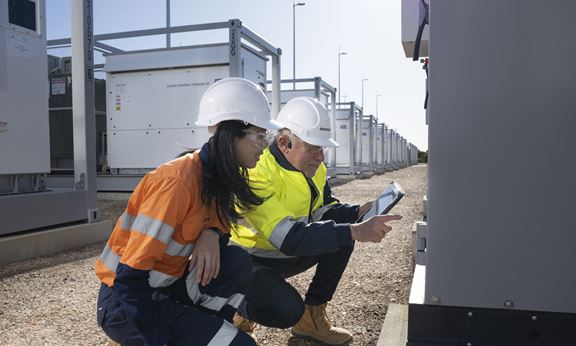
Aurecon is the technical advisor for the Australian Government's $30 million GET Grant Program, funding 14 projects to enhance energy grid resilience.


Change your location to view content tailored for you.
Engineering, design and advisory companies Aurecon and AECOM, together in a joint venture, are bringing to life innovative adaptable facilities for the Department of Defence’s next generation of Armoured Fighting Vehicle fleet across Victoria, Queensland and South Australia.
Now commencing the construction phase for Stage 1, the new facilities will support the maintenance and training requirements of the most advanced and capable fleet vehicles the Australian Army has ever acquired.


Located at Puckapunyal Military Area, Lavarack Barracks and Edinburgh Defence Precinct, the new facilities will support Projects LAND400, LAND907 Phase 2 and LAND8160 Phase 1 until 2050.
The vehicle fleet consists of combat reconnaissance, infantry fighting, main battle tank and armoured engineering vehicles.
Aurecon Managing Director, Defence and National Security ANZ, David Barnes, credits the collaborative approach of both companies to design one of Australian Defence’s most significant infrastructure projects.
“Our combined national team’s thinking has provided the Australian Defence Force with truly fit-for-purpose facilities that will support the mission readiness of the Army for many years to come,” David said.
For example, we used 3D models to determine which existing buildings and engineering services had a relationship with each other, so that we can adapt and incorporate them into the new design. In the same way, we also visualised and planned where new infrastructure could be built between existing infrastructure to drive down costs.
“Given the dispersed nature of the project, the scale of the designs required, the tight timeframe, and the fact that we are dealing with Defence bases that have facilities of various ages – these capabilities were invaluable,” David concluded.
AECOM Defence Industry Director, Andrew McDougall, said that the facilities have been designed flexibly to cater to the ambiguity of future vehicle requirements.
“The flexibility of our design means that Defence can upgrade its facilities in stages, and adapt them accordingly,” Andrew said.
"The phased acquisition of the fleet over the coming years means that we don’t know exactly how many vehicles the facilities may need to support, or what capacity of engineering services are required. Therefore, we’ve designed the facilities’ vehicle bays to be modular so that Defence can add or subtract what it needs.
“We also designed the electrical facilities and other engineering services so that they can be increased in size or adapted for future changes in vehicle numbers,” Andrew concluded.

Group Director, Brand, Marketing & Communications
Aurecon is the technical advisor for the Australian Government's $30 million GET Grant Program, funding 14 projects to enhance energy grid resilience.
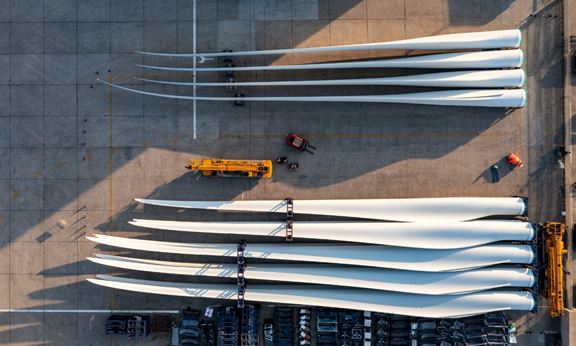
Aurecon to deliver project management services for critical hybrid renewable energy project, Gawara Baya Wind Farm and battery storage in North Queensland.
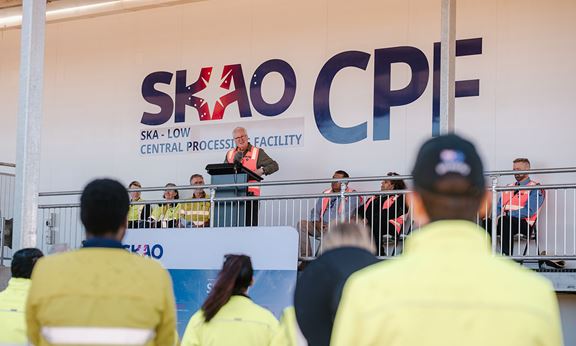
Aurecon provided the multidisciplinary engineering design for a purpose-built facility that will enable SKAO, the world's largest radio telescope.