Brisbane 2032: Creating lasting impact through transformative infrastructure
Aurecon shares insights on how the 2032 Brisbane Games can deliver legacy infrastructure and lasting economic, environmental and community value.


Change your location to view content tailored for you.
Leveraging the collective experience and expertise of Aurecon’s Aviation teams in Australia, New Zealand and Asia, we have collated a series of ideas for airports to transition from pandemic to recovery and reform, minimising the impact on passenger capacity while continuing to improve passenger comfort and confidence. This model for the future terminal is Aurecon International.
It wasn’t long ago that airports were diverse and lively businesses. From packed check-in desks, to well-stocked retail concessions and queues at the departure gates.
As the world was hit by COVID-19, airline travel reduced dramatically almost overnight with international routes not expected to fully reopen for at least another 12 months. The progression and recovery for airports from COVID-19 will occur in stages.
Airports and airlines have a joint mission to reignite international travel and restore passenger confidence – encouraging them back to travel and making them safe.
This will require changes to the physical layout of the airport and aircraft, as well as the operational processes of booking and checking in, of navigating through screening and security.
Depending on airport specifics, some industry experts have calculated that between 70 and 100 different areas in the passenger journey are expected to either change or be introduced from scratch, to restore confidence in flying.
Aurecon has modelled a gradual, flexible and incremental evolution of the eventual reopening of international travel in the Australian airport context. This includes the setting up of systems and processes to keep passengers and staff safe.
There is an opportunity to bring a completely new experience to the passenger and become an airport that reshapes its post COVID-19 business as user-centric.
The progression and recovery for airports from COVID-19 will occur in stages. This white paper is focused on Stages 2, 3 and 4 in Figure 1, outlining recommendations for reform of the aviation sector in the following sections: Pathway to ‘new normal’, Modifications to service, Considerations for recovery.
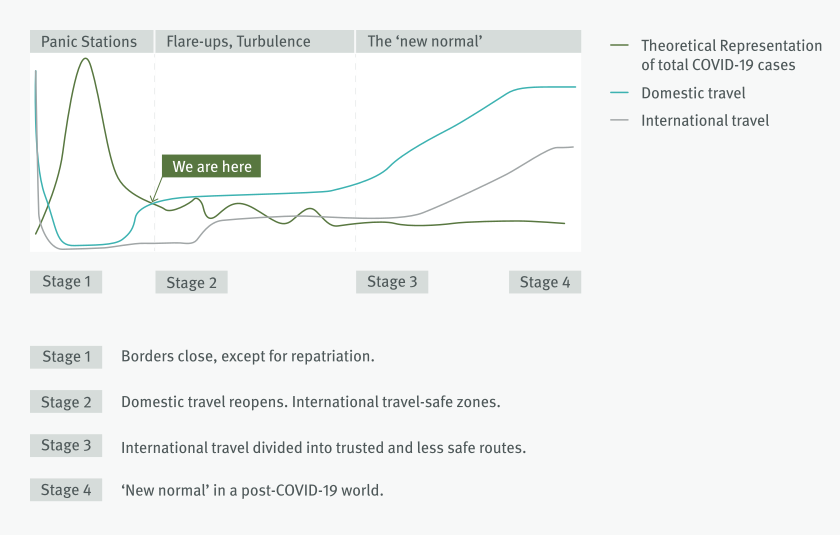
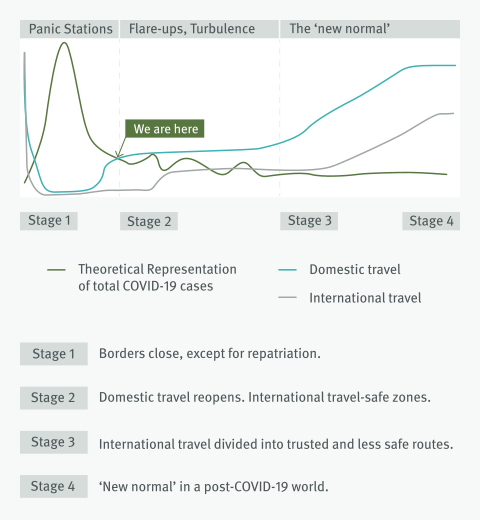
Figure 1: The stages of transition through and out of COVID-19.
Airports will need strategies for their layout and operations to transition through the staged reopening of international travel.
‘New normal’ for Australian airports is the introduction of measures that make passengers feel comfortable and safe. That airports can provide assurity to governments that passengers can be detected and traced, and that the health and control systems can cope.
We need to plot a robust recovery and reform pathway to reignite international travel. From an airport asset perspective, planning these changes needs to start now.
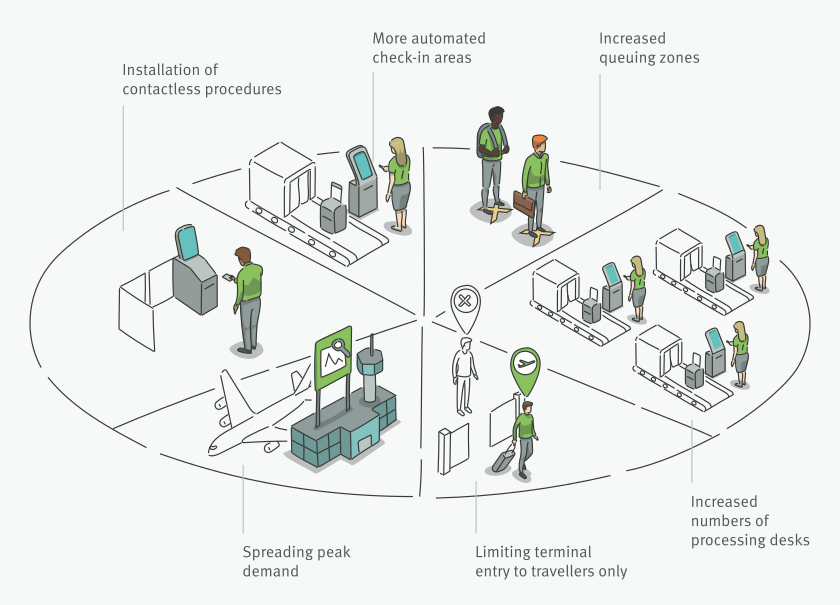
Figure 2: Airport considerations to handle increased health screening.
Insights in our white paper provide a layered approach of ideas for airports and airlines to safeguard public health, while offering a practical approach for a gradual restarting of operations. This is key to restoring passenger confidence so that the benefits of safely reigniting international travel can be realised.
The COVID-19 pandemic has revealed how interconnected the world is and how susceptible we are to disruption on a global scale.
Deliberate, yet urgent decision-making will position airports to transition out of COVID-19 and into the ‘new normal’ stage. This will take collaboration between airports, airlines, industry and governments to reignite international travel and open Australian airports. We hope it will be a long-term trend that benefits passengers and the whole industry.
Contributing author & reviewer: Erik Kriel
Aurecon shares insights on how the 2032 Brisbane Games can deliver legacy infrastructure and lasting economic, environmental and community value.
How engineering and construction projects are evolving to champion biodiversity, through early planning, advanced technologies, and ecosystem stewardship.
AI solutions offer huge benefits for businesses, but knowing where to invest in AI matters. Aurecon's digital experts discuss where AI can make the most impact.