Brisbane 2032: Creating lasting impact through transformative infrastructure
Aurecon shares insights on how the 2032 Brisbane Games can deliver legacy infrastructure and lasting economic, environmental and community value.


Change your location to view content tailored for you.
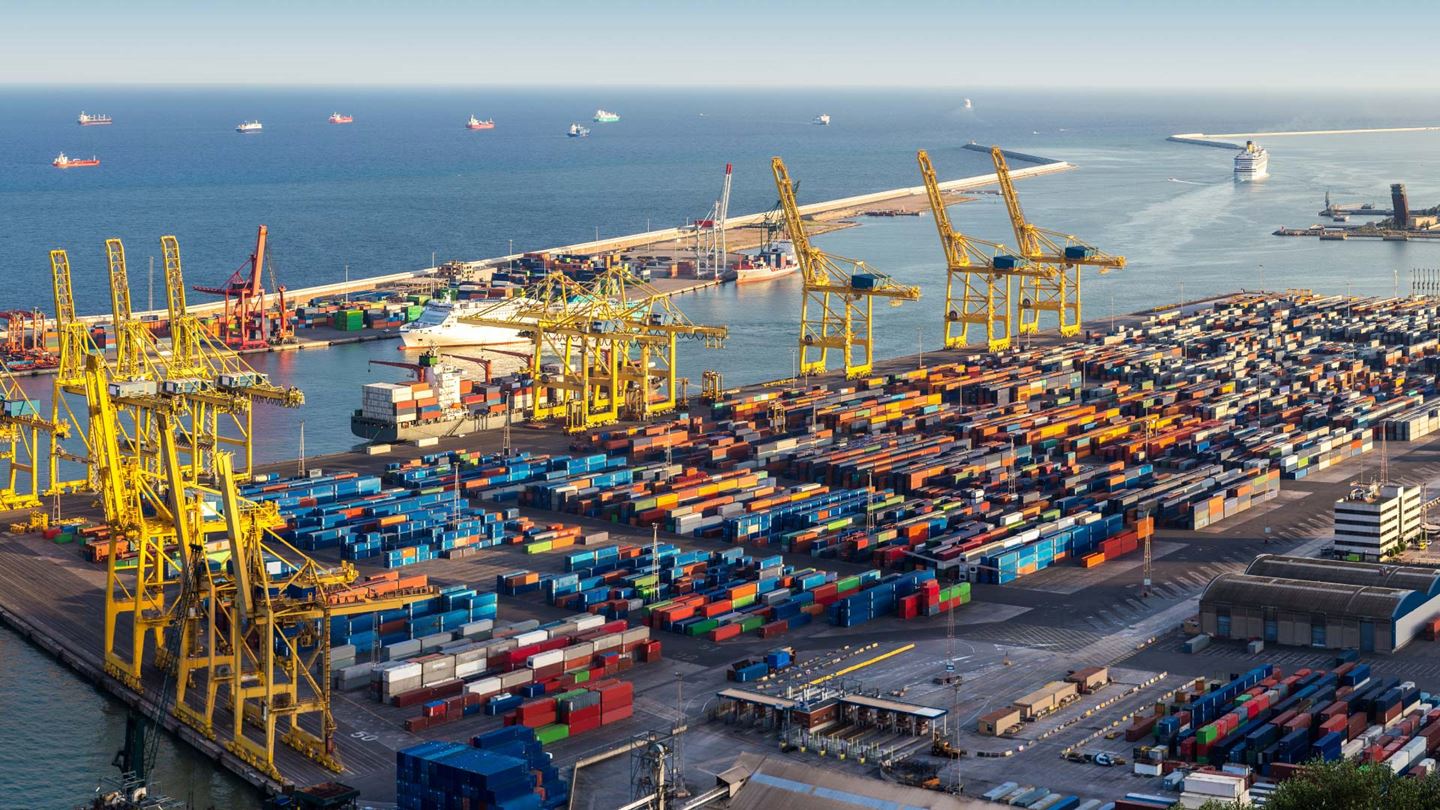
International trade increasingly relies on longer, larger and more complex ports for maritime transportation. A correlation of this growth in international sea transportation is the increased need for efficiency and capacity of ports, marine, industrial machines and structures.
Around the world, older ports are being integrated with modern supply chain and port operating systems in response to increased trade. This can sometimes present severe and demanding challenges for the operators of port assets. Particularly on the jetties and wharfs, considered the most critical assets in the operation of port facilities.
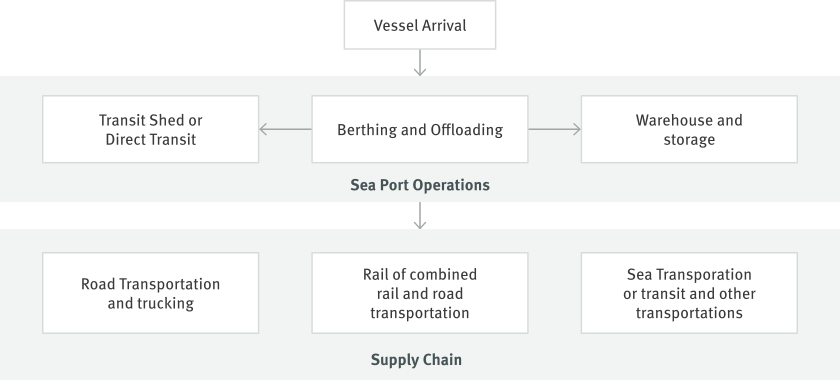
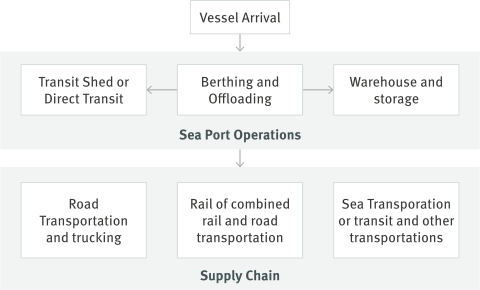
Figure 1. Port facility and supply chain operations
Ports have location rigidity and most have expansion limitations. Like any other industry, they’re influenced by a range of factors, including:
This paper gives an overview of the challenges operators face with aging port facilities and discusses a port condition risk model to help asset owners manage maintenance and investment options to ensure the integrity of a port’s structures.
As soon as structural integrity is comprised on port facilities, the operator has a problem. What starts as a cost problem may later develop into a more difficult safety and operational problem. To avoid unexpected large-scale rehabilitation measures and costly downtimes because of aging assets, the systematic planning and budgeting of integrity management activities is necessary.
This is where the risk analysis of operational factors is important and has expanded in leaps and bounds during the past three decades.
Risk is defined as a measure under uncertainty of the severity of a hazard, or a measure of the probability and severity of adverse effects. In turn, risk assessment is an essential and systematic process for assessing the impact, occurrence and consequences of unexpected events on systems with hazardous characteristics, and in response, constitutes a needful tool for safety and integrity management.
There is a lot of diversity in current risk management procedures, but on the other hand there are limited risk management models to cope with safety and integrity risks from natural disasters or aging assets at port facilities.
This paper presents a port condition risk model for port operators to identify risks at their sites and reduce the severity of failures.
The port condition risk model is a specifically-designed and risk-informed framework to estimate the short-term expected loss from operational deficiency.
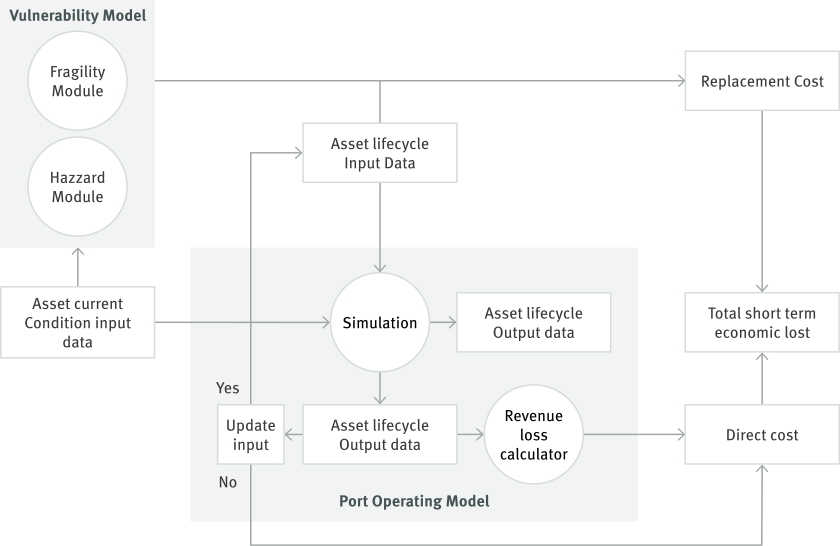
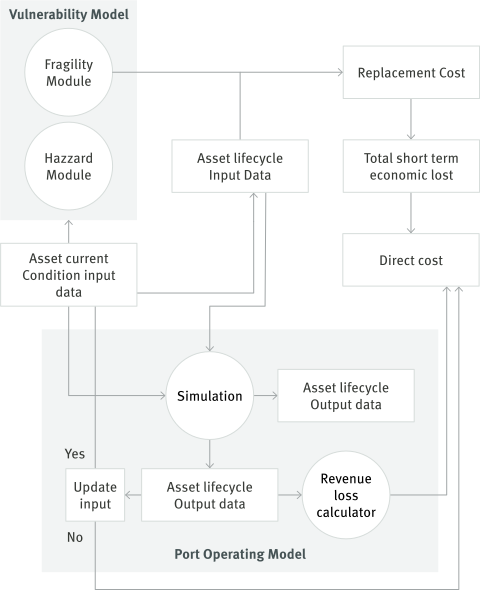
Figure 2. Port condition risk model
In its regular state, port facility and supply chain operations are assumed to be at a steady state; i.e. all structures and facilities are operational. Any assets that cease operations due to age can cause a decrease in capacity and may not only slow port operations, but the resulting delays may make the port unattractive for existing or potential customers with options of using a different port facility.
The model incorporates asset condition data, its geologic setting, the accidental event (forced or planned outage) and aging mechanisms to determine the effect on the transportation network that serves the port if there’s a reduction in capacity, and how that also affects the flow of goods through the port.
The model is comprised of two independent sub-models: Vulnerability model and port operating model.
This model applies hazard analysis followed by fragility analysis to the individual intermodal system or subsystem to produce a set of pre and post-event inputs to determine the total cost of risk mitigation actions, repair or rehabilitation costs.
The pre-event and post-event inputs from the vulnerability model are used to run the port operating model simulation. This approach employs data in a very different way as it takes into consideration the relationships between the different structures at the port.
It works by taking the data set inputs and running simulations with each of them separately but for the same duration. The model then compares the results from each run to determine the effect that the scenario-based event or degraded structure had on the port.
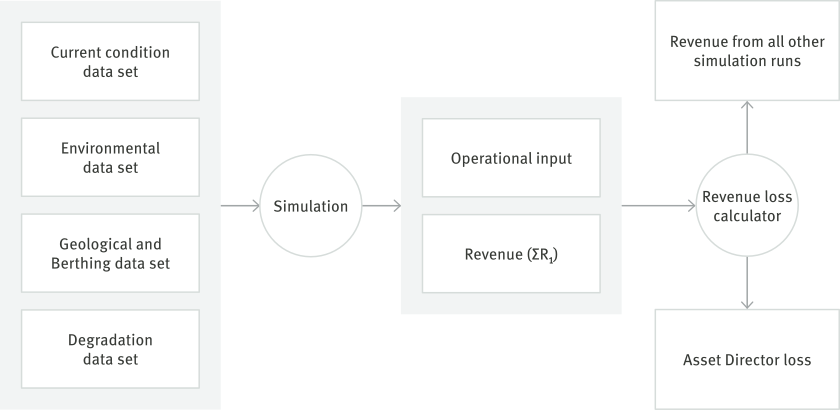
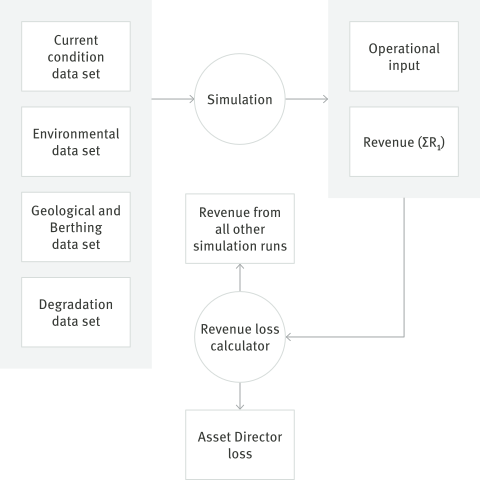
Figure 3. Port operating model
The goal of the port operating model is to measure the effect of each scenario (natural event or aged asset) on the port in terms of loss of revenue (direct loss due to downtime). The replacement cost and direct loss are combined to calculate the short-term expected economic loss to the port from disasters or asset deterioration.
Once the model has calculated and summed the revenue from all the sources for the various scenarios, the pre-event and post-event revenue is plotted as a function of time. The resulting graph represents the economic recovery function of the port. This is useful to port operators because it filters out most of the minute statistical data.
This understanding of potential direct loss allows port operators to prioritise their maintenance works and plan lifecycle management investments. In addition, port operators can compare reconstruction and repair costs between structures to validate investment decisions or develop risk mitigation action plans.
The power and flexibility of the port operating model lies in the careful assembly of its inputs and the wise application of its outputs.
The methodology greatly assists to reduce the potential risk of disasters and major asset system failure or deterioration of asset condition by providing port operators with the right data and tools necessary to make sure it does not.
This model applies hazard analysis followed by fragility analysis to the individual intermodal system or subsystem to produce a set of pre and post-event inputs to determine the total cost of risk mitigation actions, repair or rehabilitation costs.
The pre-event and post-event inputs from the vulnerability model are used to run the port operating model simulation. This approach employs data in a very different way as it takes into consideration the relationships between the different structures at the port.
It works by taking the data set inputs and running simulations with each of them separately but for the same duration. The model then compares the results from each run to determine the effect that the scenario-based event or degraded structure had on the port.
The goal of the port operating model is to measure the effect of each scenario (natural event or aged asset) on the port in terms of loss of revenue (direct loss due to downtime). The replacement cost and direct loss are combined to calculate the short-term expected economic loss to the port from disasters or asset deterioration.
Once the model has calculated and summed the revenue from all the sources for the various scenarios, the pre-event and post-event revenue is plotted as a function of time. The resulting graph represents the economic recovery function of the port. This is useful to port operators because it filters out most of the minute statistical data.
This understanding of potential direct loss allows port operators to prioritise their maintenance works and plan lifecycle management investments. In addition, port operators can compare reconstruction and repair costs between structures to validate investment decisions or develop risk mitigation action plans.
The power and flexibility of the port operating model lies in the careful assembly of its inputs and the wise application of its outputs.
The methodology greatly assists to reduce the potential risk of disasters and major asset system failure or deterioration of asset condition by providing port operators with the right data and tools necessary to make sure it does not.

Technical Director, Transport – NSW & ACT, Australia
Aurecon shares insights on how the 2032 Brisbane Games can deliver legacy infrastructure and lasting economic, environmental and community value.
How engineering and construction projects are evolving to champion biodiversity, through early planning, advanced technologies, and ecosystem stewardship.
AI solutions offer huge benefits for businesses, but knowing where to invest in AI matters. Aurecon's digital experts discuss where AI can make the most impact.